Different types of band rehearsal

Updated: Sep 5

Do you walk into rehearsal with a game plan, or do you plug in and see what happens? Bandspace looks at different types of band rehearsal.
Some bands arrive with setlists, goals and specific sections they want to work on. Others plug in, start jamming and see where the music takes them. There is no single right way to rehearse. Different approaches serve different purposes, and the most effective bands will often use several types of rehearsal as they develop their music.
A rehearsal space is more than somewhere to practise songs. It can be a place to learn and develop musical skills, write and arrange new material, experiment with a band's sound, solve technical and musical problems, prepare for recording and ultimately develop a confident live performance.
The Jam Session

An unstructured rehearsal where rather than working on imperfections in the songs, the band plays a lot of familiar and improvised material.
They might seem like playing for fun but they serve other valuable functions to:
get comfortable playing with each other
provide opportunities to invent new grooves
work on your band’s overall sound
practice communicating with each other
audition new material
They can be good opportunities to stretch your musical imagination, to build some calluses on your fingers and to test out that crazy idea that probably won’t work but might turn out great. It can be fast-paced and mistakes don’t really matter. It’s about the vibe.

If you are going to play at a jam session, do what you can to know the tunes. To be productive, all participants need to be able to follow the music. This means the tunes must be known or easily picked up on the spot by everyone. You might want to pass out some music in advance, unless the session is about running through the set everyone knows already before a performance.
Whatever your instrument, try to be ready to play the melody, chords or bass line. Always have some solo ideas and little hooks in your back pocket, playable in any key and in any style. This should be a goal of your private practice. Some jams include sight-reading, particularly if a resident songwriter wants to test out some new ideas. They are usually friendly and forgiving, but sometimes can take on a competitive edge too.
Some bands only jam. Jamming is all the fun of music and none of the hard work. This is fine, unless you are trying to evolve your skills to play gigs. Jamming isn’t about addressing the details or making polished performances. When that’s what you need to do, it’s time to woodshed.

Woodshedding
"Woodshedding" is a term commonly used by musicians to mean rehearsing a difficult passage repeatedly until it can be performed flawlessly. It is working up songs, creating interpretations, polishing parts and getting ready to perform or record. It is a focused and structured form of rehearsal.
This type of rehearsal involves spending lots of time on relatively little material - perhaps a single piece or even a few troublesome phrases within a piece. The goal is to fine-tune the music from both a technical and lyrical perspective.
Again, everyone should know their parts before the session and arrive ready to play. If you’re covering a tune by another band, everyone should have a recording of the original in advance of the rehearsal. They should have worked out their part copying the original as precisely as how you want. Avoid lengthy working out of individual parts when the whole band is together, as it wastes everyone else’s time. A little bit of this is often critical, when fine-tuning a groove or an arrangement, but try to minimize it. Individual preparation beforehand will make your rehearsals more productive.

If you’re working up an original tune or arrangement, the songwriter/arranger might distribute a “scratch” recording beforehand, giving the band an idea about tempos, grooves and so on. Ironing this out prior to the rehearsal will make better use of everyone’s time. Here are a few ways to approach learning a new tune.
Begin with the chorus. Choruses are often easier to perform than verses. Since they keep coming back, while you’re rehearsing the rest of the tune, you can always “come home,” after you get lost.
Find the hardest part. Slow down the tempo, rehearse it repeatedly until you can play it correctly, and only then, speed it up. Then, find the next hardest part.
It often helps to have just a couple of instruments rehearse a section in isolation, such as just guitar/keyboard or bass/drums, without the distractions of the rest of the band. Sometimes, hearing someone else’s part can help you clarify what you should be doing yourself. And sometimes solo practice is necessary.
Don’t get too bogged down by a particularly difficult part though. Sometimes you need to say “Gotta work this out at home,” and move on. If the part is still too difficult, then it might need to be simplified. That’s better than having it break apart during a performance. If you are sitting out while others are working out a part, follow along silently, hearing your own part in your head and feeling it in your hands. Silently finger the keys or strings, mouth the lyrics or play air drums. Stay present.
Run through a section and then stop. Were there any train wrecks? Focus on fixing them. Why did the wreck occur? Is there a confusing rhythm? Is someone else lost and confusing you by playing the wrong thing? Is the arrangement too repetitive so people are losing their place? It might be appropriate for the drummer to add a fill (even if it’s just a quick hit or two) to help clarify the form. Try to pinpoint the problem’s source and address it.
Once the band can make it all the way through the complete song discuss the arrangement. How many choruses will you play? Is there an intro? An ending? A bridge? Will someone solo? If you’re running a rehearsal, bring some extra pens and paper, to make sure everyone can write down the arrangement decisions. If there are lyrics, ensure everyone has a copy, even if they are not singing. Lyrics help people remember the arrangement and keep their place.
Work up the tune so you can play it through without any major mistakes. Practice it slower, if you need to. Speed it back up when you can all play it perfectly at a slower tempo. Work towards ending the rehearsal by playing a performance-ready version of it, start to finish.
Don’t spend too long woodshedding a single tune. After an hour or so, record it and move on to the next tune. That will keep your rehearsal from becoming stale and frustrating.
Songwriting and Creative Development

Rehearsal spaces are also creative environments where bands can write and develop new music. A songwriter might arrive with a lyric, riff, chord progression, beat or rough recording. The rest of the band can then experiment with the idea, trying different tempos, rhythms, structures and arrangements. This process can be highly collaborative. An idea that starts with one musician can change considerably once the whole band begins playing it. The rehearsal room allows musicians to hear what works in practice rather than simply imagining how something might sound.
Bands may record rough versions during these sessions and listen back afterwards. This can help them identify which sections need developing, whether an arrangement works and where a song might benefit from being simplified or expanded.
Improvisation can be an important part of this process. Not every jam will result in a song, but the freedom to experiment can produce new musical ideas and help a band develop its own sound.
Learning and Developing Songs

Not every rehearsal involves creating something new. Bands spend considerable time learning existing material, whether it is their own music, cover versions or songs written by another member of the group. The process may involve learning individual parts, establishing the tempo and key, working out vocal harmonies and deciding how the song will be structured.
Once the basic parts are known, the band can concentrate on bringing them together. Difficult sections can be isolated and rehearsed repeatedly before being incorporated into the complete song. The band can then begin making decisions about the arrangement. Is there an introduction? How many choruses will there be? Is there a solo? Does the song need a bridge? How will it end?
These decisions turn a collection of individual parts into a coherent band performance.
Playing Songs Through

Another important rehearsal practice is simply playing songs from beginning to end. Playing complete songs develops concentration, stamina and the ability to maintain communication between musicians over several minutes. It also teaches a band how to recover when something goes wrong.
A rehearsal doesn't have to stop every time somebody makes a mistake. In fact, continually stopping can prevent musicians from developing the ability to keep going. Once the song has finished, the band can identify what went wrong, work on the problem and then try the section again. Recording these run-throughs can be particularly useful. Listening back often reveals things that aren't obvious when you're concentrating on playing.
Set-List Rehearsal

Once individual songs are working, the band needs to consider how they function as a complete performance. A set-list rehearsal involves playing several songs in the order they are likely to be performed. The band can consider the overall pace and energy of the set, transitions between songs, tuning and instrument changes, introductions and the length of the performance.
A good set isn't necessarily a collection of a band's best individual songs. The order can have a significant effect on how an audience experiences the performance. Set-list rehearsal therefore moves the focus from individual songs to the overall live experience.
The Dress Rehearsal

A dress rehearsal is a session held shortly before a performance. These serve primarily to warm the band up and keep the music familiar in their heads. Dress rehearsals should not be used to introduce new pieces or changes. Before the first performance of new material, hold a dress rehearsal to run through all the tunes and do any last-minute housecleaning.
Organize your sets. Then play the tunes as if you’re performing. Don’t stop, whatever happens. Debrief after the tune. How did it go? Were there any train wrecks? If so, why did it happen? Was it just a fluke, or is there a fixable source of confusion?

Is someone going to speak to the audience, introduce a tune, or tell an anecdote? Have them practice at the dress rehearsal. Who will introduce the band? Who will say, “Thanks everyone, good night, and don’t forget to pick up some merchandise on your way out!” It’s time to settle these questions.
You want this rehearsal to be just like the actual performance. It’s a time for refreshing your memories and looking for any lingering imperfections, but not for learning anything new. That’s what your earlier rehearsals are for. The cliché “a bad dress rehearsal means a great performance” often holds true, but try to have a great dress rehearsal anyway.
Technical and Performance Rehearsal

For some bands, particularly those with more complex live setups, rehearsal also needs to address the technical side of performance. This might include microphones, amplifiers, monitors, in-ear systems, playback, click tracks, backing tracks, pedalboards, instrument changes and stage positioning. A band may be musically well rehearsed but still encounter problems because its technical setup hasn't been properly tested. Technical rehearsal provides an opportunity to identify these problems before they happen in front of an audience.
It can also help musicians become familiar with how they will physically perform on stage. Where they stand, how they move, how they communicate with each other and how they manage equipment can all affect the quality of a live performance.
The Backstage Brush-Up
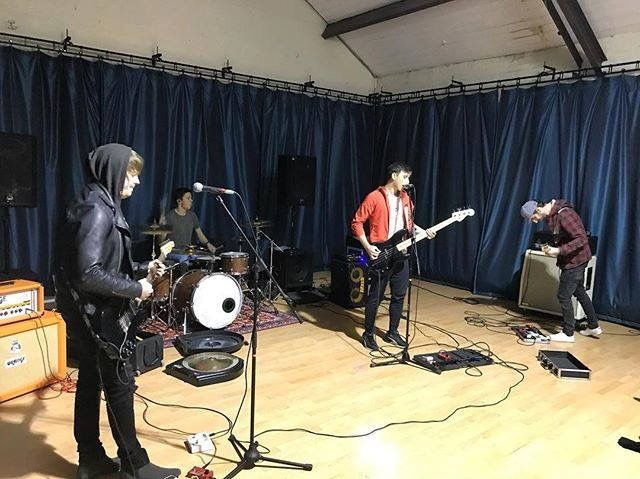
Ideally, the dress rehearsal will be on a different day than the performance. It might be necessary to brush up on the day of the performance - even a short time before you go on stage. Brush-up rehearsals serve to refresh your memory and ensure consensus about individual songs' arrangements, not to learn anything new. It’s about song order, remembering arrangements, warming up and discussing any last-minute changes.
If a backstage brush-up is necessary, avoid playing through the entire tunes. Play the intro, maybe once through arrangement, and then the ending. Review it. Take it easy. Conserve your energy.
Finding the Right Balance
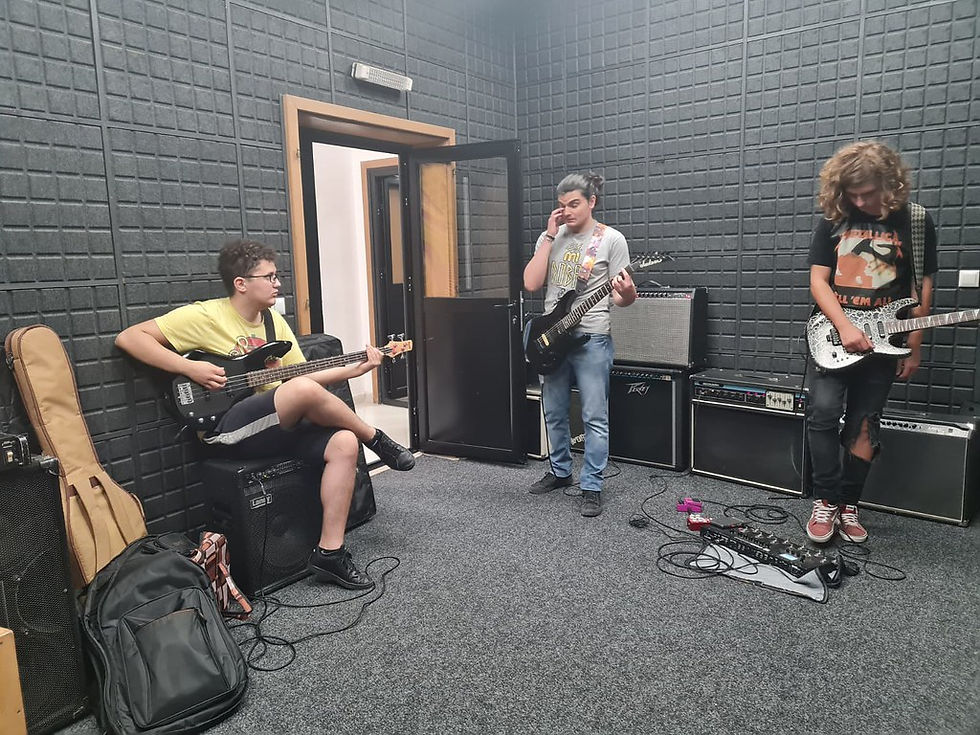
There is no single rehearsal method that works for every band. A newly formed group may need to spend considerable time learning songs and developing its arrangements, while an established band preparing for a tour may spend more time running complete sets and working on performance.
The most productive rehearsal programmes will usually combine different approaches. A band might jam to generate ideas, woodshedding to solve difficult musical problems, spend time developing and arranging songs, run complete songs and set lists to build consistency, and then use a dress rehearsal to prepare for the performance.
The key is understanding what the band is trying to achieve before it starts playing. A rehearsal doesn't have to be completely structured to be productive, and it doesn't have to be completely spontaneous to be creative. The best rehearsal practice is often a combination of both: enough structure to make progress, with enough freedom to allow new ideas to emerge.
Ultimately, the rehearsal space is where musicians move from practice to performance. It is where songs are learned, ideas are created, arrangements are developed, problems are solved, musical relationships are formed and performances are prepared. Mixing different rehearsal practices over time can help a band develop its skills, strengthen its identity and get the most from the limited time it has together.


Comments