BANDSPACE
FAQs
What is Bandspace?
The aim of Bandspace is to improve access to information about music rehearsal spaces. It aspires to act as the voice of music rehearsal spaces, set up to uphold high standards for professional spaces for all types and standards of musician. Bandspace has the support of the UK's Musicians Union and the Music Industries Association. We wish to build a picture of the national music rehearsal space sector, encourage spaces to use social media to attract new customers and represent their interests to establish an international network of spaces.
Why do we need Bandspace?
There is little information about the music rehearsal space sector, despite the important role the many and varied spaces around the world play in supporting and developing musicians. Bandspace has and will continue to undertake research in to the sector and share its findings.
What is a practice room?
Practice rooms are designed to keep sound inside. Rooms can vary from a damp cellar to a mirrored hall. Some rooms can be large enough to accommodate an invited audience. Rehearsal spaces situated in major cities tend to have more practice rooms where much of musicians' work takes place. Sometimes room hire can be on long-term let or sub-let.
What's the difference between a rehearsal space & practice room?
Most music rehearsal spaces have a number of practice rooms with hire rates determined by room size and facilities. Practice rooms are often unique in response to their users, location and the building they are housed in, developed over several years.
Who uses a music rehearsal space?
Musicians increasingly need access to high quality spaces as the monetary value of land and buildings grow. They act as a critical meeting point between amateur and professional musicians and bands. A number of spaces work with record companies, promoters, publishers, music management companies, orchestras and opera companies. In our Top Tips series of blogs we suggest how musicians can use their time productively when using a music rehearsal space.

What's the difference between a rehearsal space & recording studio?
Practice rooms are often part of a complex of rooms that includes a recording studio. Unlike a practice room, a recording studio requires a sound engineer to operate the equipment increasing the cost to the user. Such facilities often have relaxation and refreshment areas, with advertisement boards for musicians. Some practice rooms double up as a live recording area attached to a recording studio control room.
What can a practice room offer my band?
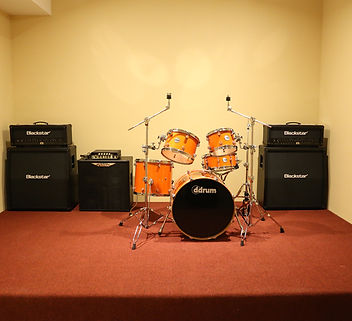
Industry standard 'backline' electric and bass guitar amps and a drum kit (often without cymbals) are often made available. There are many music rehearsal spaces offering good quality practice rooms for musicians to perfect their informal music-making, in some cases leading to international stardom. Spaces should hold public liability insurance.
When should I hire a practice room?
There are many places used by musicians and bands for rehearsing, including makeshift rooms and shared areas such as halls, community centers and even Dad's garage. But if you don't want to get yelled at to 'Turn it Down' then a dedicated practice room is the way to go. Most rooms are cheaper to hire on a weekday than in the evening or at weekends.
How big a practice room do I need?
If one took an average band to have at least four members: a singer, guitarist, bass player and drummer, then 400 square feet would be sufficient room for them and their equipment.


How often should my band rehearse?
Many bands rehearse at least once a week for four hours duration mostly in the evenings and at weekends, and the peak session hire rates reflect this.
What amplification can I expect to get in a practice room?
They usually house a PA system set up to produce a balanced sound by amplifying all instruments and sound sources to an equal level. The power (or loudness) of the PA system varies according to the room size, from the smallest at 200w to a 3Kw rig with floor monitors. Often guitar amplifiers and drum kits can be included in the room hire, along with microphones, mic stands, mixing desk and effects (FX) units.
How much should I expect to pay to hire a practice room?
Prices vary according to location, facilities provided and there are usually day, evening and weekend rates, but expect a music rehearsal space to clearly advertise their rates and what is included eg. PA and drum kit.
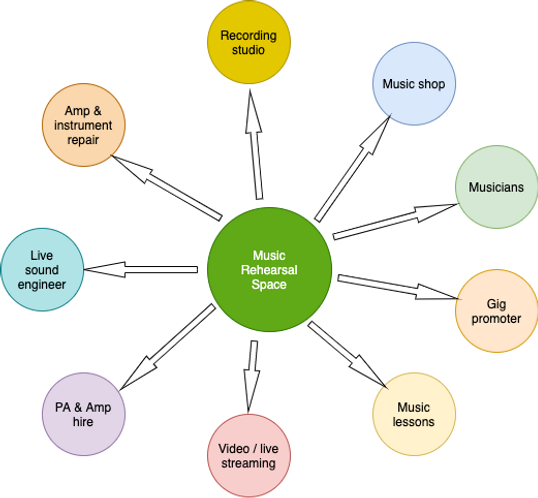
The role of the music rehearsal space
They can provide a range of services outlined in the diagram. Many spaces either provide some of these services or can point users in the right direction. They are well placed to signpost users on to these services.
Thinking of setting up your own music rehearsal space? Then head on over to our Technical series of blogs to read about the things to think about when running one....
What instruments and equipment should I bring?
Most musicians use the same equipment for rehearsal and live performance. This means musicians often bring their own instruments and equipment. Some have so much 'gear it is a problem to move their equipment in one go. Storage can solve this problem. Storage space is offered at the larger music rehearsal spaces and is charged by the amount of space required.
Can I make a live recording in a practice room?
Practice rooms with recording facilities are handy for those wanting to review their progress, although the quality of the recording is variable. Some rooms offer a 'live' recording option operated by band members. Making a live recording of a rehearsal can often be adequate for 'demo' purposes.