Insuring your music studio

Updated: Aug 29

Anyone running a professional music rehearsal space is likely to have a significant amount of money invested in instruments, equipment, premises and other essential resources. This might include everything from laptops, PA systems, microphones and cables to specialist recording and production equipment.
Having appropriate insurance in place can help protect your investment, your business and your ability to provide a safe environment for staff, musicians and customers.

What is insurance?
Insurance is essentially a way of managing risk. By taking out an insurance policy, you transfer the financial risk of a potential loss to an insurance company in return for a fee, known as the premium. The insurer collects premiums from its customers and uses them to pay valid claims when losses occur.
Many individual musicians take out additional cover on their home contents insurance to protect their instruments and equipment. Kate Evans of insurance firm Urban Jungle reported that, between 2020 and 2022, the company saw a significant increase in the number of policies including musical instruments. Although she could not identify a definitive reason for the increase, she suggested that the rise was closely associated with the Covid-19 pandemic, when many people took up new hobbies or began learning musical instruments during lockdown.

Why does a music rehearsal space need insurance?
For a commercial rehearsal space, however, the situation is rather different. A business may much money invested in equipment, as well as significant investment in adapting and improving its premises. Standard household contents insurance is unlikely to provide the level of protection required.
Accidents, theft, fire, flooding and other unexpected events can and do happen. If you do not have sufficient financial reserves to deal with a major loss, the consequences can be severe. Replacing equipment, repairing premises or dealing with a claim from a customer could put considerable pressure on a business's finances and potentially threaten its ability to continue operating.
Insurance is therefore not simply about protecting equipment. It can help protect the business itself, its income and its ability to keep providing a service to musicians when something goes wrong.
Bandspace spoke to several rehearsal-space owners about their experiences of insuring their businesses, what they discovered along the way and what they would recommend to others. But before we hear from them, there are a few important things to understand.

Risk Assessment
Before considering your insurance needs, take some time to identify the risks associated with running your rehearsal space.
A risk assessment helps you identify potential hazards in the workplace and consider who could be affected, including staff, musicians, customers, contractors and visitors. It can also help you identify the types of insurance you may need and determine which areas of cover should be prioritised.
Running a music rehearsal space involves a range of potential risks, from electrical equipment and trip hazards to noise, fire, manual handling and the use of specialist equipment. Understanding these risks is an important part of protecting the health and safety of everyone using your space.
A risk assessment should not be treated as a one-off exercise. Review and update it regularly, particularly when you introduce new equipment, change how the space is used, carry out building work or become aware of new risks.

Using an Insurance Broker
It is worth considering using a specialist insurance broker who understands the particular risks associated with running a music rehearsal space.
A specialist broker can help you identify the types and levels of cover you need and recommend an insurance package suited to your circumstances. Because they understand the industry, they may also be able to identify risks or areas of cover that a general insurance provider might overlook.
If you need to make a significant claim, the broker can also act as an important intermediary between you and the insurer. They will typically liaise with the insurer and, where appropriate, the loss adjuster, helping to negotiate and manage the claim on your behalf.
Using a broker may also provide access to competitive premiums or specialist policies that are not readily available directly to the public. The main benefit, however, is having someone who understands your business and can help ensure you have the right protection in place before something goes wrong.
“It is rare for me to be insured with the same company for more than a couple of years in a row. My broker, who is an entertainment specialist, will suggest the company offering the best deal. That does mean comparing the new policy with the previous year's policy which can be time-consuming. Each insurer seems to have slightly different endorsements.” Phil Mayne, House of Mook

Keeping Records and Making a Claim
It is important to be thorough and accurate when completing your insurance documentation and to keep your records up to date.
Keep records of equipment purchases, invoices, receipts, valuations, repairs and servicing wherever possible. Photographs and other evidence of ownership can also be useful. You do not necessarily need the original receipt for every item. Evidence can include bank or credit-card statements, purchase receipts, equipment boxes and manuals, as well as photographs showing the equipment in use.
Good record-keeping can make the claims process much easier and put you in a stronger position when establishing the value of your loss and supporting the amount you are claiming.
For expensive items, particularly high-value equipment, your insurer may require a valuation. Check the requirements of your policy rather than assuming that a receipt alone will be sufficient.
Types of insurance for music rehearsal spaces

Public Liability - essential / commonly required
Public Liability insurance can protect your business against claims from customers, visitors and other third parties who are injured or whose property is damaged as a result of your business activities.
For commercial rehearsal spaces, this is particularly important because you have a responsibility for the safety of customers and visitors using your premises.
Depending on the policy, cover may also extend to activities that are a normal part of running the business, including the actions of volunteers, contractors and other people working on your behalf.

It is important to understand exactly where and when your public liability insurance applies. Does your policy cover shared or communal areas, entrances, corridors and your car park? Does it cover customers carrying equipment to and from rehearsal rooms? What happens if a customer injures themselves while moving their own equipment around your premises?
These are useful questions to raise with your insurer or broker rather than discovering the answer when you need to make a claim.
You should also check the policy's exclusions carefully. Some policies may exclude claims arising from assault or battery, for example, if a physical altercation takes place on your premises.
If your business also provides services away from the rehearsal space, such as sound engineering at gigs, or transports equipment, check that these activities are covered too.
If your rehearsal space sells, supplies or manufactures products, check whether your liability insurance includes products liability cover. This can protect the business against claims that a product it supplied caused injury or damage. For a rehearsal space that only provides rooms and equipment for customers to use, this may be less relevant.
“Public liability should cover you working away from the studio, for example sound engineering a gig and possibly also equipment in transit - in case of a crash or a vehicle being broken into before load-in.” Scott Nairn, Playing Aloud
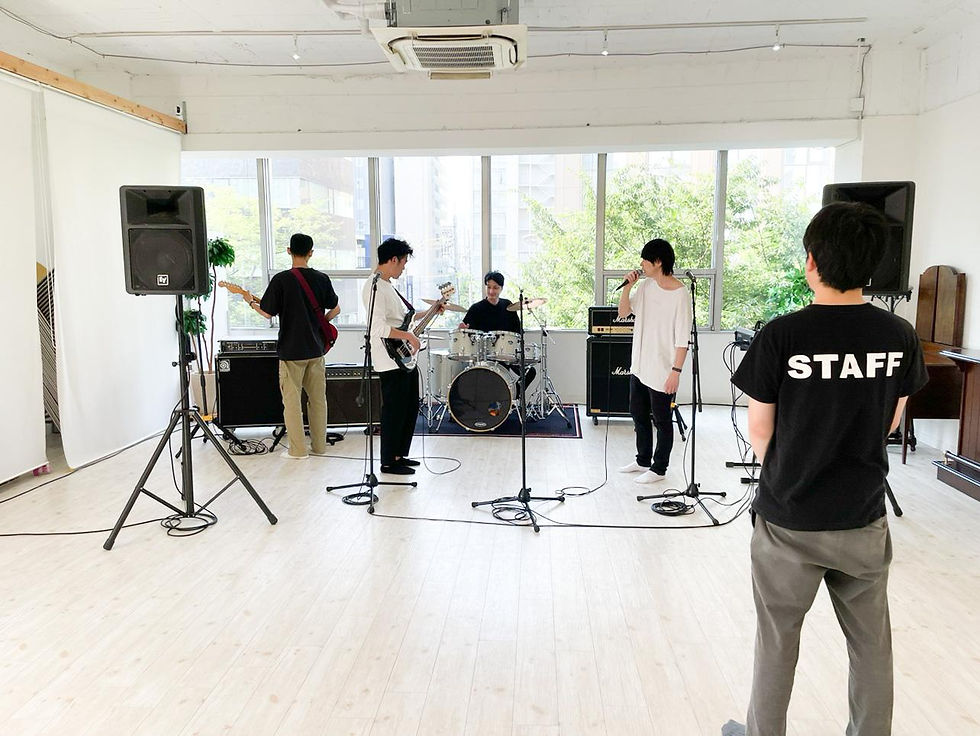
Employers’ Liability - essential / commonly required (where applicable)
If you employ people, you are normally legally required to have Employers' Liability insurance in place. It protects your business if an employee becomes ill or is injured as a result of the work they do for you.
It is important to consider who is classed as an employee. Depending on the circumstances, this can include people working under your direction or control, even where they are unpaid volunteers. If you use volunteers, freelancers, contractors or other workers, check with your insurer or broker whether they are covered.
Employers’ Liability and Public Liability insurance protect against different risks. Employers’ Liability focuses on claims made by people working for your business, while Public Liability generally covers claims made by customers, visitors and other third parties.
For a small rehearsal-space business, having appropriate Employers’ Liability cover helps meet your legal responsibilities and demonstrates that you take the health, safety and welfare of your staff seriously. Some insurers may offer Employers’ Liability as part of a wider commercial insurance package, often alongside Public Liability cover.

Business Contents - essential / commonly required
Business contents insurance can protect the equipment and belongings used to run your rehearsal space against risks such as theft, fire, flooding and accidental damage.
For a music rehearsal space, this could include computers and other IT equipment, office furniture, business records and documents, as well as other items used in the day-to-day running of the business.
Depending on the policy, cover may also extend to items that are temporarily away from the premises. Some policies can also provide cover for artwork, visitors’ personal belongings and petty cash.
Make sure you understand what is included in your policy and whether the level of cover is sufficient to replace everything you would need to continue operating following a major loss.

Equipment - essential / commonly required
If your rehearsal space provides portable equipment for customers to use or hires it out separately, check that the equipment is adequately insured against theft, loss and accidental damage.
This could include PA systems, guitar and bass amplifiers, mixers, microphones, speakers and other portable technical equipment.
Depending on the policy, portable equipment may be covered as part of your business contents insurance, with additional cover available for equipment taken away from the premises.
If you hire equipment from another business rather than owning it yourself, check who is responsible for insuring it against loss or damage. Do not assume that your existing contents policy will automatically cover hired or rented equipment.
You should also check whether your policy covers equipment while it is in the custody or control of a third party. Some policies may exclude your own equipment when it is being used or held by customers.
“It is obviously better to ensure damage does not happen in the first place. If mixing desks are wall mounted we secure them properly. We quickly repair wobbly wheels on amps. We also have notices up asking people not to turn the mixing desk/amp on or off. If they are having trouble with the mixing desk, or any piece of equipment, they know to let us know. We'll be happy to give them a helping hand and go through the basics.” Scott Nairn, Playing Aloud

Buildings - essential / commonly required (if you own the premises / are responsible for insuring it)
Commercial property insurance protects the building itself against damage caused by risks such as fire, flooding, storms and other insured events. It generally covers the physical structure rather than the contents or equipment inside it.
Commercial property insurance is not generally a legal requirement for business owners in the UK. However, if you own the building from which your rehearsal space operates, insuring it should be a high priority.
A major incident such as a fire or flood could make the premises unusable, forcing you to cancel bookings and potentially causing a significant loss of income.
If you have a mortgage on the property, your lender may also require you to have appropriate buildings insurance as a condition of the loan.

Equipment Breakdown - important cover to consider
Equipment Breakdown insurance can protect your business against the unexpected costs associated with sudden mechanical or electrical failure.
For a music rehearsal space, the failure of essential equipment such as amplifiers, mixing desks, PA systems, computers or other technical equipment can cause significant disruption. Depending on the policy, Equipment Breakdown cover can help with the cost of repair or replacement and may provide support to minimise downtime.
Many rehearsal spaces already keep spare or backup equipment available for precisely this situation. This can reduce the immediate impact of equipment failure and may influence the level or type of breakdown cover you decide is appropriate.
Check the policy carefully to understand what equipment is covered, what types of failure are included and what exclusions or limits apply.
“The insurance company may value kit by how much it sells for on eBay, possibly comparing an expensive piece that rarely sells to one in poor condition. The cost of servicing kit to maintain it in good working condition may also not be reflected in the replacement cost. Insurance companies should value equipment based on what it would cost a music space to replace it rather than what they sell for.” Jimmy Mulvihill, Bally Studios
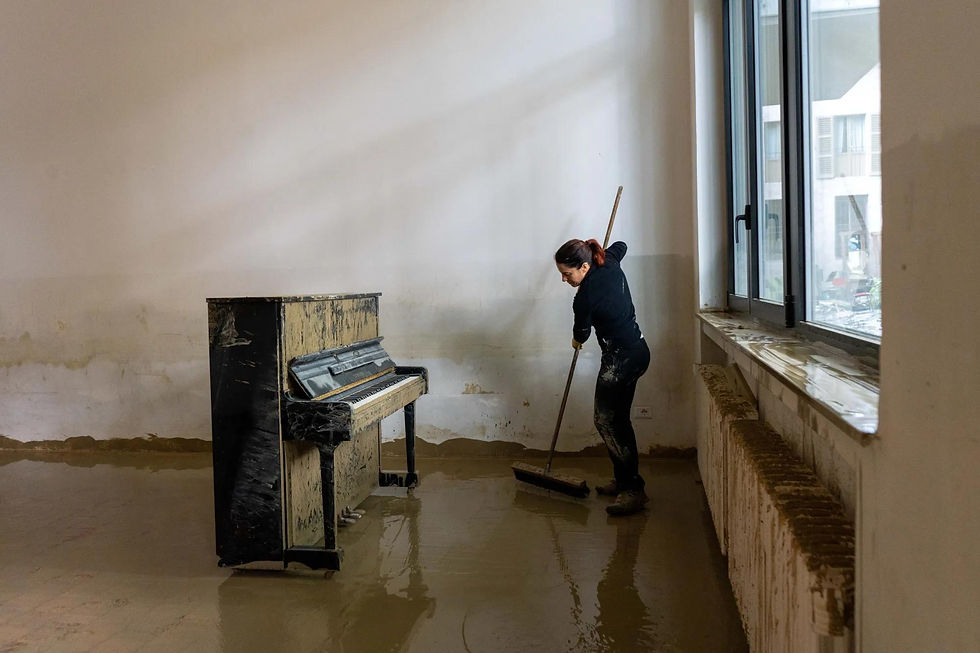
Business Interruption - essential / commonly required
The impact of a fire, theft, flood or other major incident can extend far beyond the immediate damage to your premises and equipment. If your rehearsal space is forced to close while repairs are carried out, you could lose income even though your business costs and financial commitments continue.
Business Interruption insurance is designed to help protect your income following an insured event that prevents or restricts you from trading.
Depending on the policy, it can help cover lost income and ongoing costs such as rent, wages and other essential bills while your business gets back up and running.
For a rehearsal space, this cover can provide valuable financial breathing space, helping you maintain relationships with customers, staff and suppliers while you recover from an unexpected disruption.
“Make sure you have an accountant who can project your losses. It can be very hard to prove the cost of things so your past accounts need to be in order for you to make a successful claim.” Deanna Bogdanovic, BonaFide Studio

Tenant’s Improvements - additional cover to consider
Most music rehearsal spaces do not own the buildings they operate from. An industrial unit, for example, is unlikely to be ready-made for rehearsal, so the tenant may need to invest heavily in adapting the premises.
Tenant’s Improvements cover is designed to protect investment made in rented premises. This can include:
acoustic treatment and soundproofing
partition walls creating rehearsal rooms
double-glazed acoustic doors and locks
fixed electrical installations
lighting
flooring
reception areas
fixed PA or technical installations
fire-safety improvements
decorating
These are not ordinary business contents. They are alterations or improvements made to the premises and should therefore be considered separately when arranging insurance. They can represent a significant investment, but not every rehearsal-space operator will need separate tenant's improvements cover. The terms of your lease may determine who is responsible for insuring them, and in some cases they may be covered by the building owner's insurance or considered part of the building itself.
If you have invested thousands of pounds adapting a building for use as a music rehearsal space, make sure you understand how that investment would be protected if the premises were damaged.

If you rent your premises
If you rent or lease your rehearsal space, responsibility for insuring the building will normally sit with the landlord, rather than the tenant. However, check your lease carefully to understand exactly who is responsible for what.
You may still need insurance for improvements or alterations you have made to the premises. This is why Tenant’s Improvements cover is particularly important for rehearsal spaces.

Hire Replacement Cover - additional cover to consider
Losing essential equipment can mean losing income as well as disrupting creative work. Some insurers provide hire replacement cover, allowing policyholders to hire temporary replacement equipment while a claim is being assessed.
The amount available varies between insurers and policies and may be calculated as a percentage of the insured value of the equipment. This can help you hire temporary replacements while your claim is being settled, subject to the terms and limits of the policy.
For a busy rehearsal space, the ability to continue operating while an insurance claim is being resolved can be extremely valuable. Check whether your policy includes hire replacement cover, how much is available and whether the cost is deducted from the final claim payment.

Equipment hire and storage - additional cover to consider
Rehearsal spaces may hire or rent out equipment such as PA systems, amplifiers, microphones, drum kits, keyboards and other backline equipment. If you hire equipment from a third party, check whether your insurance covers equipment that you do not own while it is in your possession. The equipment owner may also have specific insurance requirements.
If you rent or provide electrical equipment for customers to use, your insurance policy may require you to demonstrate that appropriate safety procedures are in place. This could include regular Portable Appliance Testing (PAT), routine maintenance and keeping records of inspections, testing and repairs.
Where equipment is expensive, hired for extended periods or used by customers, it is particularly important to establish who is responsible for insuring it against theft, loss or damage.

If you provide equipment storage, check whether customers' belongings are covered while they are stored on your premises. Property belonging to customers or other third parties may require additional or specific cover.
Similarly, musicians bringing their own instruments and equipment into your rehearsal space would not normally be covered by your business equipment insurance. They would generally be responsible for arranging their own insurance against theft, loss or damage.
It is therefore important to make the responsibilities of both the rehearsal space and its customers clear in your terms and conditions.
“There is generally an excess of £150-£250 on claims under a loss or damage policy section. Most mechanical or electrical breakdown repairs may therefore not be covered, although the cost of hiring in additional equipment could well be.” Phil Mayne, House of Mook
“A business is not legally obliged to carry out PAT testing, and though they should, any competent person can do it satisfactorily with the right tools and training.” Tim Nissen, First Avenue Studios

Customers' Equipment - additional cover to consider
Musicians regularly bring valuable equipment into rehearsal spaces. This might include guitars, amplifiers, pedals, keyboards, laptops, microphones and other instruments or equipment.
Your business insurance does not automatically mean that customers' property is covered. If equipment is left overnight, stored at the premises or placed in your care, check whether your policy provides cover for customers' property in your custody or control.
If you offer lockers, instrument storage or other storage services, this becomes particularly important.

Equipment in Transit - additional cover to consider
If the business transports equipment between rehearsal rooms, venues, suppliers, repairers or other locations, you may need goods-in-transit cover.
Check the conditions relating to theft carefully. Some policies may only cover theft where there is clear evidence of forced entry or a break-in. Equipment that is simply lost, left unattended or stolen without signs of forced entry may not be covered.
Do not assume that equipment covered while it is inside your premises will automatically be covered while it is being transported.
“The turnaround for replacing items can be a long time. An insurance company may say ‘we try to settle claims within 60 days’. If all the equipment in a music space was stolen 60 days would represent a large sum of money in lost bookings. More attention should be paid to how fast the claim is settled than is currently the case.” Jimmy Mulvihill, Bally Studios

Cyber Insurance - additional cover to consider
Cyber insurance can protect your business against the financial consequences of digital threats such as cyber-attacks, hacking, malware and data breaches.
For a music rehearsal space, a cyber incident could compromise customer or business data, disrupt your booking system, disable your IT network or prevent you from accessing important files. In more serious cases, criminals may attempt to hold data or systems to ransom.
Depending on the policy, cyber insurance can help cover the costs of investigating and responding to an incident, recovering data and systems, dealing with a data breach and managing financial losses resulting from the attack.
Recovery from a cyber-attack can be time-consuming and expensive. Cyber insurance can provide financial support and access to specialist assistance, helping your business respond quickly and get back to normal operations.

Legal Expenses - additional cover to consider
Running a rehearsal space can involve a range of legal issues and disputes. Legal expenses insurance can provide access to legal advice and help cover certain legal costs, subject to the terms and conditions of the policy. A rehearsal business could become involved in disputes involving:
customers
suppliers
employees
contractors
landlords
leases
unpaid invoices
employment matters
Some commercial insurance packages include legal expenses or employment legal protection as part of the policy, while others offer it as an optional extra.
Legal expenses insurance is not the same as liability insurance. Liability insurance generally covers claims made against your business for injury, illness or damage, whereas legal expenses insurance can help with the costs of pursuing or defending certain legal disputes.

Professional Indemnity - additional cover to consider
Professional indemnity insurance may be relevant if your rehearsal space provides professional advice, specialist services or activities in addition to room hire. This could include:
music tuition
artist development
recording and production
technical consultancy
engineering
training and workshops
other professional advice or specialist services
Professional indemnity insurance can provide protection if a client claims that your professional advice, work or services caused them financial loss. Depending on the policy, it may also cover associated legal costs.
It is not necessarily required by every rehearsal space, but it is worth discussing with your insurance broker if your business provides services beyond simply hiring rehearsal rooms.

Property Owners' Liability - additional cover to consider
If you own the building in which your rehearsal space operates, you should consider property owners' liability insurance. This can provide protection if someone is injured or their property is damaged as a result of a problem with the building or property for which you are responsible. It is important to distinguish between:
Buildings insurance – covers damage to the physical building itself.
Property owners' liability – covers claims arising from injury or damage to property connected with a building that you own or are responsible for.
Property owners' liability may already be included within a wider public liability policy, so check exactly what your existing insurance covers rather than assuming that a separate policy is required.

Motor Insurance and Business Use - required where applicable
If your rehearsal space uses a car or van for business purposes, make sure the vehicle has the appropriate level of motor insurance. This could include:
transporting equipment
collecting equipment
making deliveries
travelling between sites
taking equipment to gigs or events
collecting equipment from repairers
If employees use their own vehicles for business purposes, they should also check that their motor insurance allows the relevant type of business use.
It is important to remember that equipment-in-transit insurance does not replace motor insurance for the vehicle itself. Make sure both the vehicle and the equipment being transported have appropriate cover.
The type of business use required will depend on how the vehicle is used, so check with your insurer or broker to make sure the policy accurately reflects your business activities.

Personal Accident and Key Person Cover - additional cover to consider
Some small rehearsal spaces rely heavily on the owner or one or two key members of staff to keep the business running. If an important member of the team is unable to work because of an accident, illness or other unexpected event, this could have a significant impact on the operation of the business.
Personal accident insurance can provide financial support following certain accidents, while key person insurance can help protect the business financially if the loss of an individual who plays a critical role has a significant impact on its ability to operate.
These types of cover may therefore be worth considering where the continued operation of the rehearsal space depends heavily on a small number of people.
Money and Cash - additional cover to consider
Although many rehearsal spaces now use card and online payments, some businesses may still handle cash, deposits or other money on the premises.
If this applies to your business, check whether your insurance provides appropriate cover for money held on the premises or while being transported to the bank.
Choosing the right level of cover

If you are operating a professional music rehearsal space, standard contents insurance may not be sufficient. A dedicated commercial insurance policy can provide broader protection for your equipment, premises, improvements, liabilities and other risks associated with running the business.
The right combination and level of insurance will depend on how your rehearsal space operates, including:
whether you own or rent your premises
the value and type of equipment you own
whether you hire equipment to customers
whether customers store equipment at your premises
whether equipment is taken off-site
whether you employ staff
whether you provide services away from the studio
the extent of the alterations or improvements you have made to the building
your level of income and ongoing business costs.

Check what your policy actually covers
Insurance policies can differ significantly, even when they appear to provide similar levels of protection. Having insurance is not enough; you need to make sure that your policy reflects the way your rehearsal space actually operates.
When discussing your requirements with an insurer or specialist broker, explain what your business does and the risks involved. Make sure they understand what equipment you own, what equipment belongs to customers, whether you hire equipment, whether musicians leave equipment on the premises, whether you employ staff and whether you provide additional services such as teaching, recording, production or equipment hire.
It is also important to check the insurance requirements contained in your lease, finance agreements, equipment-hire contracts and any agreements with other organisations.
The aim is to identify the risks associated with your particular business and make sure you have an appropriate level of cover for those risks. Do not assume that a standard commercial policy will automatically cover everything you need.
The types of insurance outlined above cover many of the principal risks faced by a music rehearsal space. However, every business operates differently, and you may need additional cover depending on the services you provide, the equipment you use and the responsibilities you have for your premises and customers' property.
The following types of insurance may therefore be worth considering.

Musicians’ Union Insurance
The Musicians’ Union (MU) provides a range of insurance benefits as part of individual membership.
The MU offers musical instrument and equipment insurance for individual members, providing cover for instruments and equipment they own. The level of cover and terms are subject to the current membership and insurance arrangements.
It is important to note that this insurance covers the musician and their equipment, rather than equipment or property belonging to the rehearsal space.
Annual MU membership also includes a Personal Accident Scheme, which can provide financial benefits in the event of qualifying injury or disability resulting from an accident.
These benefits can provide useful additional protection for musicians using or hiring rehearsal spaces, but they do not replace the commercial insurance arrangements required by the rehearsal space itself.

HR and Employment Support
Running a small business can be time-consuming, particularly when you are managing the day-to-day operation of a rehearsal space alongside administration, paperwork and other business responsibilities.
If you employ staff, there are additional responsibilities to consider, including employment contracts, working hours, pay, holidays, workplace policies and dealing with staff issues.
For small businesses without dedicated HR support, access to reliable advice can be particularly valuable, helping business owners understand their responsibilities and deal with employment issues more confidently.
Some commercial insurance packages also include employment advice or HR support alongside legal expenses insurance. This can provide access to guidance when dealing with employment-related matters, although the level of support will vary between policies.
It is therefore worth checking whether your insurance package includes HR or employment support and understanding what is covered before you need to use it.

Final Thoughts
There is no single insurance package that will suit every music rehearsal space. A small studio operating from rented premises will have very different needs from a large facility with employees, multiple rooms, expensive equipment and an equipment-hire business.
The important thing is to understand the risks associated with your particular business, identify what you need to protect and make sure your insurance policy reflects how the space actually operates.
Insurance should be part of a wider approach to risk management that includes regular risk assessments, equipment maintenance, good security, appropriate health and safety procedures, accurate financial records and clear terms and conditions for customers.
Most importantly, don’t wait until something goes wrong to discover what your insurance policy does - and does not - cover.
A special thanks to Jon Wilford at Hencilla Canworth Insurance Brokers. And thanks go to House of Mook, Playing Aloud, Bally Studios, First Avenue Studios, BonaFide Studio, Mill Hill Music Complex and Silver Lining Studios in helping to compile this piece.
Disclaimer: This article is intended as general information and should not be regarded as insurance or legal advice. Insurance products, terms, exclusions and levels of cover can change. Always check the current policy wording and seek advice from a suitably qualified insurance professional about your individual circumstances.
Sound on Sound's article - Insurance For Studios, Producers, Engineers & Musicians


Comments