Preparing for the Recording Studio: Make Your Rehearsal Count

Updated: Sep 24

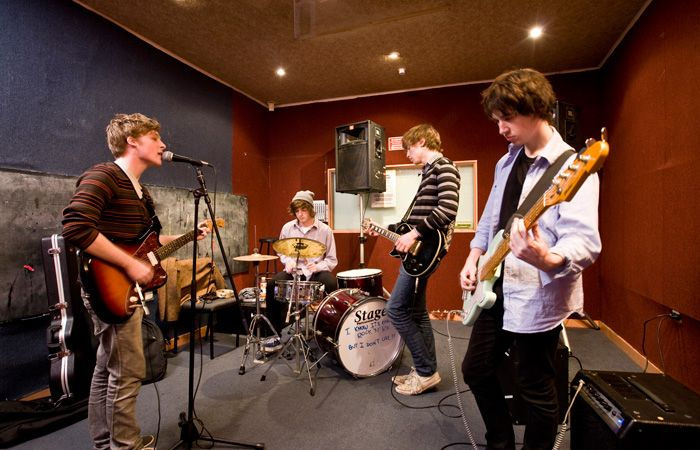
The rehearsal space isn't simply a room you hire before going to the recording studio - it is an essential part of the creative and recording process where you develop the music until you're ready to perform it. If you're preparing for the recording studio you should make your rehearsal count.
The importance of preparing your music in the rehearsal space before visiting the recording studio cannot be understated.
Studio time can be expensive. The rehearsal room gives you the opportunity to work out the music, solve problems, experiment with arrangements and develop the performance without watching the studio clock. The better prepared you are when you enter the recording studio, the more time you can spend making a great recording. A recording session should not be the place where you are still learning the songs. It should be where you capture the music you have already developed and rehearsed.

Start with the songs
Before you book the recording studio, make sure you know what you want to record. Work on:
Song structure
Chords and melodies
Lyrics
Introductions and endings
Breaks and stops
Instrumental sections
Vocal harmonies
Backing vocals
Tempo and dynamics
Lock down the fundamental elements of each song during rehearsal. You should have a clear idea of how you want the songs, sounds and performances to be represented when they are recorded. Don't leave fundamental decisions until the recording session. The studio should be a place to capture and develop the performance — not somewhere to finish writing the song. It is also worth writing and rehearsing more songs than you eventually intend to record. This gives you the opportunity to select your strongest material rather than feeling obliged to record everything you've written.
Rehearse until the songs become second nature
Playing a song correctly in a rehearsal room is one thing. Performing it confidently in a recording studio is another. The studio environment can be unfamiliar. There may be microphones everywhere, headphones instead of amplifiers, isolation screens, limited sightlines between musicians and an engineer sitting behind the mixing desk. All of this can affect a band's performance. Rehearse until the difficult parts no longer feel difficult.
You want the musicians to be thinking less about what comes next and more about how the music feels. If a particular section repeatedly goes wrong, stop and work on it. Don't simply keep playing the whole song and hope it improves. The aim is to get the songs into your muscle memory. No section should feel like an overwhelming challenge when the record button is pressed.

Use the rehearsal time wisely
Don't spend the whole rehearsal simply playing the songs from beginning to end. If the intro is weak, work on the intro. If the second verse isn't working, concentrate on that section. If the ending needs changing, try several alternatives. Break the songs down into sections and give yourself time to experiment.
A productive rehearsal isn't necessarily the one where you play the most songs. It's the one where you solve the most problems. This is one of the great advantages of a rehearsal space. You can stop, start, repeat and experiment without paying recording-studio rates for every minute.
Record your rehearsals
One of the simplest and most useful things you can do is record the band rehearsing. It doesn't need to be a professional recording. A phone or simple recorder can reveal things you don't notice while playing.
The rehearsal recording becomes part of your pre-production process. It allows the band to hear what is actually happening rather than relying on what they think they played. You can also use a good rhythm-section recording when rehearsing vocals, guitars or other instruments. This means the drummer and bass player don't have to play the same section repeatedly while everyone else works on their parts.
Listen back for:
Tempo problems
Weak introductions
Unconvincing endings
Overly busy arrangements
Vocal problems
Timing issues
Sections that lack energy
Instruments competing with each other

Get the tempo right
Agree on the BPM for every song. A small change in tempo can completely alter the feel of a recording. Establishing the tempo during rehearsal means everyone has a common reference when you arrive at the studio. Some songs benefit from a click track. Others work better without one. Try both approaches in rehearsal.
For more complex projects, you can go further and create guide tracks or tempo maps before the recording session. Rehearsing with those guide tracks allows musicians to become comfortable playing to the click before entering the studio. The important thing is not whether you use a click. It is that you have already considered the approach and know what works for the music.

Prepare the vocals
Don't leave vocal preparation until the recording session. Perhaps the vocals are one of the most important aspects of your songs. Work on:
Melody
Pitch
Timing
Phrasing
Breathing
Difficult lyrics
Vocal range
Harmonies
Backing vocals
Pronunciation
If there are sections that are difficult to sing or pronounce, identify them during rehearsal. A prepared vocalist can concentrate on expression, emotion and delivery rather than simply trying to remember the words or notes. Technical accuracy matters, but it isn't the whole performance. A recording also needs character, attitude and feeling.

Think about the arrangement
The rehearsal room is the ideal place to experiment. Ask yourself:
Does every instrument need to play throughout the song?
Could the chorus have more impact if something drops out?
Should the guitars play different parts?
Would backing vocals work better in the second chorus?
Would percussion, keyboards or another instrument add something?
Could a section be shorter?
Could an instrumental break create more impact?
These decisions can make a huge difference to a recording — and they are much easier to experiment with in a rehearsal room than while paying studio rates. The rehearsal process is where raw ideas can become a cohesive body of work, and where arrangements can be tested and refined before recording.

Don't rehearse the life out of it
Preparation doesn't mean making every performance identical. Leave room for energy, spontaneity and interaction between the musicians. Sometimes the take with a tiny imperfection is the one that feels alive.
The purpose of rehearsal is not to remove everything that makes the band human. It is to make sure the musicians are confident enough to concentrate on the performance rather than the mechanics of playing the song. You don't want to arrive at the studio technically perfect but emotionally flat. Rehearse the music. Don't rehearse the life out of it.

Prepare the equipment
Your instruments need to be ready too. Make sure:
Guitars and basses are properly set up
Instruments are accurately tuned
Cables are working
Pedals and effects are working
Amplifiers are functioning properly
Spare strings, sticks, picks and other essentials are available
Any specialist equipment you need has been identified
If you're recording drums, don't overlook the condition of the drum kit. Worn or badly pitted drumheads can make drums difficult to tune and produce a dull, inconsistent sound. Replacing them before recording can save considerable time in the studio. Think about which instruments and equipment are essential to your sound and make sure they will be available for the session.

Decide how you want to record
There isn't one correct way to record a band. You might record everyone together to capture the energy and interaction of a live performance. Alternatively, you might record the rhythm section first and overdub the other instruments.
If you are recording live, make sure the band can perform together confidently. If the instruments will be recorded separately, make sure the musicians are comfortable playing along with headphones and guide tracks.
Rehearse the approach you intend to use. Some songs may work particularly well as a live performance, while others may benefit from building the recording one part at a time.

Know what you want to achieve
Before you arrive at the studio, be clear about what you want to achieve during the session. Are you trying to make a finished single? A demo? An EP? A live-sounding recording? Are you recording everything in one session or building the tracks gradually? Prioritise the things that matter most.
If time or budget becomes tight, knowing which songs, performances or parts of the recording are essential means you can make informed decisions rather than rushing everything. A clear plan gives the studio time a purpose.

Choose the recording studio carefully
The studio itself should suit the project. Think about:
The type of music you are recording
The size and acoustics of the live room
The equipment available
The microphones
The backline
The engineer
Previous work produced there
Your budget
You may even decide that different parts of the project require different spaces — for example, recording drums in one studio and guitars or vocals somewhere else. For musicians working with a limited budget, it can be better to record fewer songs to a higher standard than try to record too much and leave the project unfinished.

Talk to the engineer before the session
If possible, involve the recording engineer before you arrive at the studio. A conversation, video call or rehearsal visit can help everyone understand what is required. The engineer can:
Hear the songs
Meet the musicians
Understand the instrumentation
See the band's equipment
Discuss recording techniques
Suggest suitable equipment
Help identify potential problems
Prepare the studio for the session
Good communication before the session can prevent misunderstandings once recording starts. It is also useful to provide reference tracks. If there are recordings by other artists that capture something about the sound you are trying to achieve, share them with the engineer and producer. A reference track can help everyone understand what you mean when you describe the sound you want.

Make a recording checklist
A few simple preparations can save a surprising amount of time on the day. Before leaving for the studio, make a checklist covering:
Instruments and cases
Spare strings, drumsticks, picks and batteries
Pedals, power supplies and cables
Tuners
Lyrics and chord sheets
Click tracks and guide tracks
Reference recordings
Song tempos/BPM
Backing tracks or samples
Any specialist equipment
Make sure everyone knows what they are responsible for bringing. It sounds obvious, but discovering that an essential cable, pedal or power supply has been left at home can waste valuable studio time.

Have a final rehearsal
Your final rehearsal should not be about learning the songs. It should be about confirming that you're ready. Run through the songs as you intend to record them. Record the rehearsal if possible and listen back. If the bridge doesn't work, the ending needs changing or the tempo isn't right, this is the time to discover it. Not when the microphones are already set up. This final rehearsal is your opportunity to make any last changes while you are still in the relatively inexpensive and flexible rehearsal environment.

Don't schedule the session too tightly
Leave some time for unexpected things. Setting up may take longer than expected. A particular guitar sound might need experimenting with. A vocal may need another take. You might discover an arrangement that works better than the one you rehearsed.
If every minute has been allocated to recording another track, there is no room for creativity. Good preparation creates flexibility — it doesn't eliminate it.

The rehearsal space is part of the recording process
It is easy to think of the rehearsal room as something that happens before the "real" work begins in the recording studio. It isn't. The rehearsal space is part of the recording process. It is where the songs are developed, arrangements tested, performances refined and problems solved. It is where musicians can experiment without the financial pressure of studio time.
A good rehearsal can also help establish a clear creative direction before recording begins. Rather than arriving at the studio with a collection of unfinished ideas, you arrive with songs that have been tested, challenged and developed. Most importantly, good preparation allows the musicians to concentrate on the things that make a recording memorable:
Energy. Character. Emotion. Performance.
Technical accuracy matters, but a great recording is about more than playing every note perfectly. The purpose of all that preparation is to remove the distractions so that when the microphones are switched on, you can concentrate on making music.

So before you book the recording studio...
Book the rehearsal room. Give yourself the time and space to develop the songs, experiment with arrangements, prepare the performances and solve the problems. Then walk into the recording studio knowing that the music is ready. Make the rehearsal count.


Comments